Modernizing an Aging Production Line: When to Upgrade, Retrofit, or Replace Industrial Equipment
Manufacturing equipment is built to work hard, often for decades. Over time, however, even well-maintained production lines can begin to show their age. Controls become outdated, replacement parts become harder to source, cycle times no longer meet production demands, and maintenance teams spend more time keeping older equipment running.
For many manufacturers, the question is not simply whether equipment is old. The real question is whether the current production line is still capable of meeting today’s operational requirements and tomorrow’s growth goals.
Modernizing an aging production line does not always mean replacing everything. In many cases, the most effective approach is a combination of upgrades, retrofits, automation, and selective equipment replacement. The right strategy depends on the condition of the machinery, the reliability of the current process, the availability of parts and support, and the manufacturer’s long-term production goals.
At ESC Induction, we work with manufacturers that are evaluating how to improve existing production equipment without automatically starting from scratch. By looking at the entire process, manufacturers can identify where modernization will create the greatest operational value.
Start With the Problems You Are Trying to Solve
Before deciding whether to retrofit or replace industrial equipment, manufacturers should begin by identifying the problems affecting the current production line.
Common warning signs include:
- Frequent unplanned downtime
- Increasing maintenance costs
- Difficulty sourcing replacement parts
- Outdated PLC controls or operator interfaces
- Inconsistent heating or process performance
- Production bottlenecks
- Excessive manual handling
- High energy consumption
- Limited process monitoring
- Equipment that cannot support higher production volumes
Understanding the root problem helps prevent unnecessary equipment purchases. A production line suffering from outdated controls may not need to be replaced. A control upgrade, new sensors, or improved automation may solve the issue while preserving machinery that still has years of useful service life.
On the other hand, if the mechanical structure, electrical system, heating equipment, and controls are all approaching the end of their practical lifespan, replacing the system may provide better long-term value.
When an Equipment Upgrade Makes Sense
An upgrade is often the simplest form of production line modernization. Instead of changing the entire process, manufacturers improve specific components that are limiting performance.
Common upgrades include:
- PLC and control system modernization
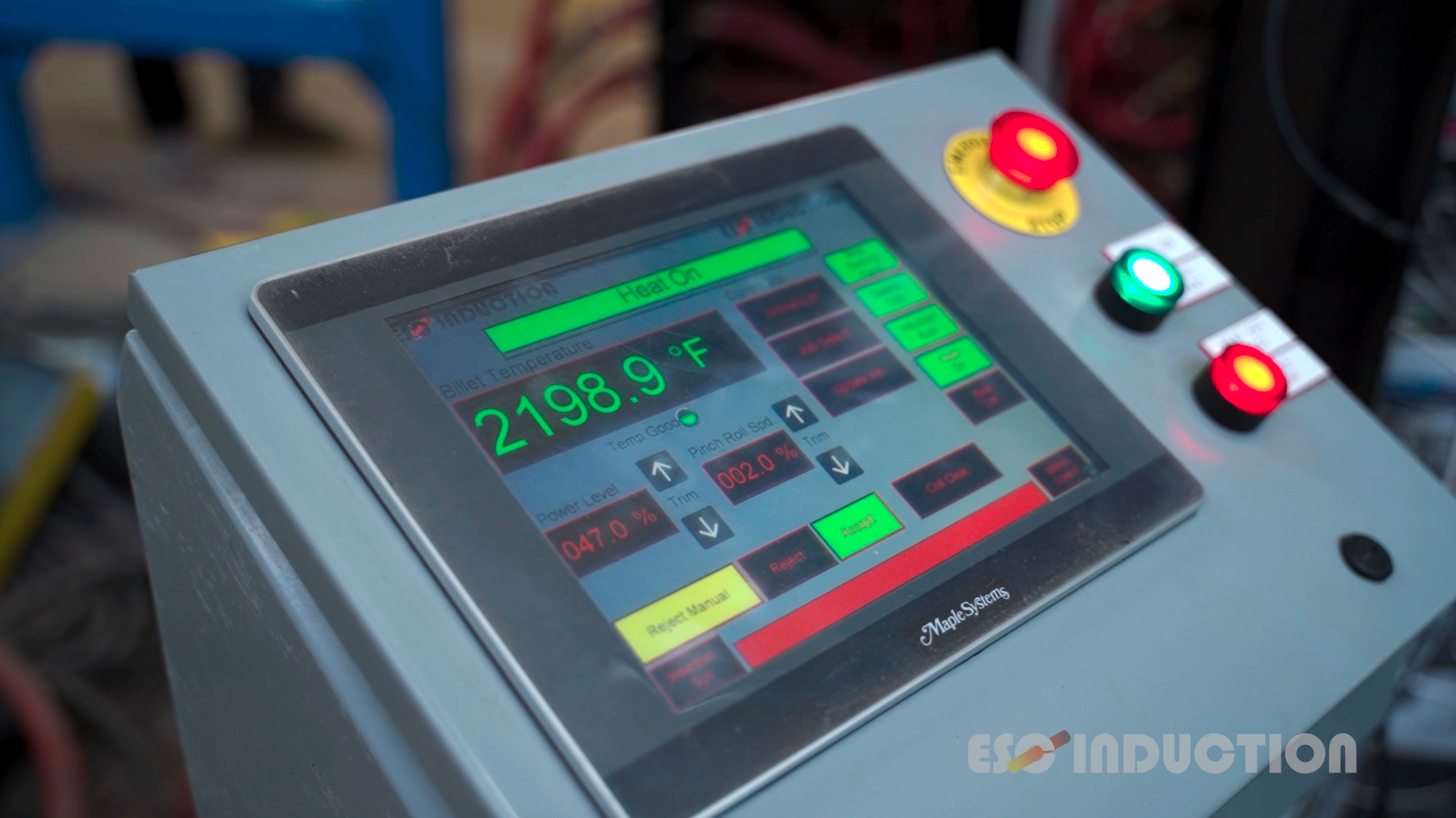
- Touchscreen HMI upgrades
- Improved sensors and process monitoring
- New induction coils
- Cooling system improvements
- Power supply updates
- Safety system upgrades
- Remote diagnostics
- Replacement of obsolete electronics
Control upgrades are especially valuable on older industrial machinery. A mechanically sound machine may continue performing well, while its original PLC, display, or electronics have become obsolete or difficult to maintain.
Modern controls can give operators better access to production recipes, alarms, diagnostics, and system status. They can also make troubleshooting faster by providing maintenance teams with more information about what is happening inside the machine.
For manufacturers using induction heating equipment, modernization may also involve replacing an older coil design, improving cooling performance, or updating electrical components to support more consistent heating and better reliability.
When a Retrofit Is the Better Option
A retrofit goes beyond replacing individual components. It involves integrating new technology or equipment into an existing production process.
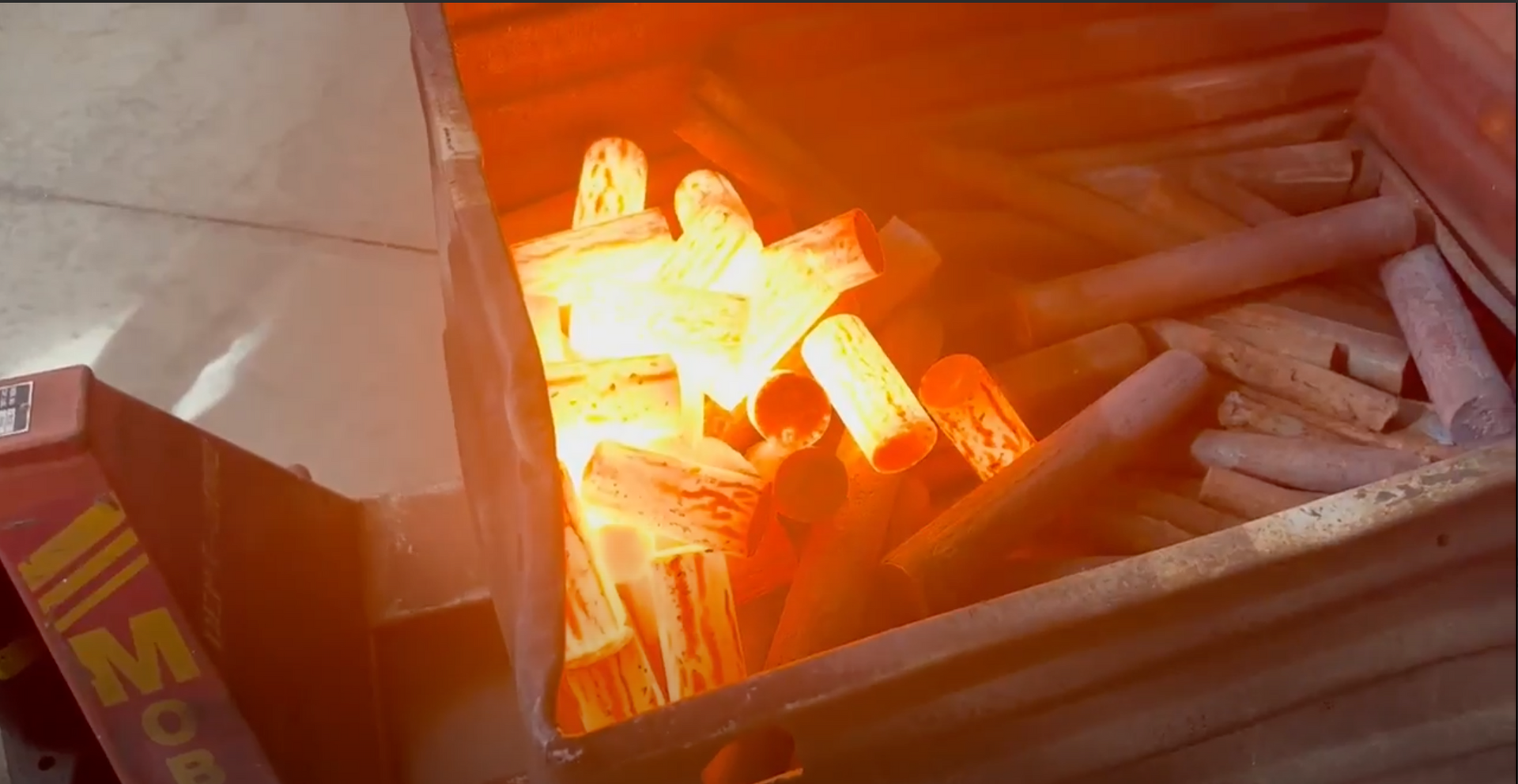
For example, a manufacturer may have a production line that performs well overall but relies on an aging furnace or heating method that is creating a bottleneck. Instead of replacing the entire line, an industrial induction heating system may be integrated into the existing process.
Other retrofit opportunities include:
- Adding robotic or automated material handling
- Integrating induction heating into an existing line
- Adding conveyors or indexing systems
- Replacing manual loading with automated loading
- Installing new cooling equipment
- Adding process monitoring and data collection
- Updating safety guarding and interlocks
The key to a successful retrofit is understanding how the new equipment will affect everything around it.
If a new induction heating system reduces heating time significantly, for example, the equipment downstream must be able to accept parts at the new production rate. Otherwise, the modernization project may simply move the bottleneck from one point in the line to another.
This is why production line modernization should be approached as a complete manufacturing process rather than a collection of individual machines.
Automation Can Extend the Value of Existing Equipment
Automation is another way manufacturers can modernize without replacing an entire production line.
Many older processes were designed when labor was more readily available and production volumes were lower. As manufacturing requirements change, repetitive manual tasks can become a limiting factor.
Adding automation can improve:
- Material handling
- Part positioning
- Cycle consistency
- Operator safety
- Throughput
- Process repeatability
Automation does not have to mean rebuilding the entire factory. In many cases, targeted automation can be integrated around equipment that is already performing well.
For example, robotic handling or an indexing system may be added before and after an existing heating process to reduce manual movement and create more consistent cycle times.
The objective should always be to solve a specific manufacturing challenge, not to automate simply for the sake of automation.
Consider the Availability of Replacement Parts
One of the most practical reasons to modernize older manufacturing equipment is parts availability.
As machinery ages, original components may become obsolete. Proprietary electronics, discontinued PLCs, specialized control boards, and older sensors can become increasingly difficult to replace.
This creates risk for manufacturers because a relatively small component failure can result in extended downtime while a replacement is located or redesigned.
Modernizing critical controls and electronics before they fail can help reduce this risk. Standardized components, modular controls, and readily available replacement parts make long-term maintenance easier and can shorten recovery time when problems occur.
Manufacturers should consider not only whether a machine is currently operating, but also how quickly it could be repaired if a critical component failed tomorrow.
When Is It Time to Replace Industrial Equipment?
Upgrades and retrofits can extend the useful life of manufacturing equipment, but there is a point where continued investment in an aging machine no longer makes operational or financial sense.
Replacement may be the better option when equipment experiences frequent failures, requires increasingly difficult-to-source components, cannot meet current production requirements, or would require extensive modifications to support modern controls and automation.
Manufacturers should also consider how much internal time is being spent maintaining older equipment. A machine may technically still operate, but if maintenance teams are constantly troubleshooting problems, fabricating replacement components, or making temporary repairs, the true cost of keeping that equipment running may be much higher than it appears.
Signs that replacement should be considered include:
- Recurring mechanical or electrical failures
- Increasing unplanned downtime
- Obsolete controls and components
- Limited access to replacement parts
- Inability to meet required cycle times
- Inconsistent process results
- Increasing energy or maintenance costs
- Limited ability to integrate automation
- Safety limitations that are difficult to correct
- Production requirements that have significantly changed since the machine was installed
Replacing equipment also creates an opportunity to rethink the process rather than simply recreating an older machine with newer components. Manufacturers can evaluate material handling, heating requirements, controls, cooling, operator interaction, maintenance access, safety, and future expansion as part of one engineered system.
Look Beyond the Initial Equipment Cost
Capital equipment decisions should not be based on purchase price alone. The long-term operating cost of industrial machinery can have a much greater impact on the overall return on investment.
When comparing an upgrade, retrofit, or replacement, manufacturers should consider factors such as energy consumption, maintenance requirements, replacement parts, labor, cycle time, scrap, downtime, and expected equipment life.
A lower-cost solution that requires frequent maintenance or creates recurring production interruptions may ultimately cost more than equipment designed around reliability and serviceability.
The same applies to heating equipment. Improving heating efficiency, temperature control, and cycle consistency can affect more than energy consumption. It can influence throughput, product quality, downstream operations, and the amount of material lost to inconsistent processing.
A modernization project should therefore be evaluated according to what it can improve across the complete production process.
Design Modern Equipment With Maintenance in Mind
Modernization is also an opportunity to make industrial machinery easier to maintain.
Maintenance access is sometimes treated as a secondary consideration during equipment design. In practice, it can have a significant impact on how quickly technicians can inspect, troubleshoot, repair, and return a machine to production.
When designing or updating manufacturing equipment, consider questions such as:
- Are commonly serviced components easy to access?
- Can replacement parts be sourced without excessive lead times?
- Are controls and electrical components clearly documented?
- Can technicians quickly identify alarms and system conditions?
- Can the equipment support remote diagnostics?
- Are preventative maintenance requirements clearly defined?
- Can components be replaced without disassembling large portions of the machine?
These details may not receive much attention when a new machine is first installed, but they become extremely important throughout the equipment's operating life.
Building serviceability into the system from the beginning can help maintenance teams respond faster and reduce unnecessary production interruptions.
Choose an Equipment Partner, Not Just an Equipment Supplier
The company that builds or modernizes industrial machinery can be just as important as the equipment itself.
Manufacturing equipment is expected to remain in service for years. During that time, production requirements may change, components may wear, controls may need updates, and unexpected problems may occur.
Before selecting an industrial equipment manufacturer, consider what happens after installation.
Can the company provide replacement parts? Does it offer preventative maintenance? Can technicians provide remote diagnostics? Is on-site service available? Can the equipment be upgraded as production requirements change?
A long-term equipment partner should understand both the machinery and the manufacturing process it supports.
At ESC Induction, our work includes custom induction heating systems, automation, custom machinery, coils, cooling systems, controls, preventative maintenance, replacement parts, remote technical support, and equipment upgrades. This allows our team to look beyond an individual component and understand how the complete system works together.
Modernization Should Prepare the Line for What Comes Next
A successful production line modernization project should solve today's problems while leaving room for tomorrow's requirements.
Manufacturers may need greater production capacity in the future. New products may require different heating recipes or part sizes. Additional automation may be introduced. Controls may need to communicate with other plant systems. Material handling requirements may change.
Considering those possibilities during the initial engineering process can make future modifications easier.
This does not mean manufacturers need to predict every change that will happen over the next decade. It means designing equipment with enough flexibility that reasonable changes can be accommodated without requiring another complete rebuild.
Modular equipment design, programmable controls, accessible electrical systems, adaptable material handling, and properly sized cooling systems can all contribute to longer equipment life.
Upgrade, Retrofit, or Replace? Start With the Process
There is no universal age at which manufacturing machinery should automatically be replaced. A well-maintained system may continue delivering reliable production for many years, while another machine may become a significant source of downtime much earlier.
The decision should begin with the manufacturing process.
What is limiting production? Where is downtime occurring? Which components are becoming difficult to maintain? Is the heating process still efficient? Can the current controls support the information operators and maintenance teams need? Would automation eliminate a bottleneck? Can the existing equipment accommodate future production goals?
Answering those questions helps determine whether an upgrade, retrofit, or completely new system provides the strongest path forward.
At ESC Induction, we engineer industrial heating and manufacturing solutions around the application rather than forcing the application into a standard machine. Whether a manufacturer needs to modernize an existing induction system, integrate induction heating into a production line, add automation, upgrade controls, improve cooling, or develop completely new custom machinery, the process starts by understanding what the operation needs to accomplish.
If aging equipment is beginning to limit your production line, it may be time to evaluate what should stay, what can be improved, and what needs to change.
ESC Induction provides custom induction heating systems, automation, industrial machinery, controls, coils, cooling systems, equipment upgrades, preventative maintenance, and technical support for manufacturers across a wide range of industries.
Ready to discuss your production line? Contact ESC Induction to talk with our team about your current equipment, production challenges, and modernization goals.