What to Consider When Integrating Induction Heating Into an Existing Production Line
Improving an industrial heating process does not always mean replacing an entire production line. Many manufacturers can integrate induction heating into existing equipment to improve heating speed, process control, energy use, or production consistency while preserving other parts of the operation that are already working well.
The challenge is making sure the new equipment works with the existing process.
Successful industrial induction heating integration requires more than selecting a power supply and placing a coil around a part. Engineers must consider material flow, controls, utilities, cycle time, cooling, safety, available floor space, and the equipment located both before and after the heating station.
At ESC Induction, we approach these projects by first understanding the customer's complete manufacturing process.
Start With the Manufacturing Goal
Before discussing equipment, manufacturers should clearly identify the problem they are trying to solve.
Is the current heating process creating a production bottleneck? Are energy costs increasing? Is temperature consistency affecting product quality? Does the facility need greater throughput? Is an aging furnace becoming difficult to maintain?
The answers determine how induction heating should be incorporated into the operation.
Common goals include:
- Reducing heating cycle times
- Improving temperature consistency
- Increasing production throughput
- Reducing energy consumption
- Improving automation
- Reducing manual material handling
- Replacing aging heating equipment
Defining the objective first allows engineers to develop a solution around a measurable manufacturing need.
Evaluate the Existing Production Flow
An induction system rarely operates completely independently.
Parts need to arrive at the heating station, move through the process at the correct rate, and continue to the next manufacturing step. Changing heating cycle time can therefore affect equipment elsewhere on the line.
For example, replacing a slower heating process with induction may allow parts to reach temperature significantly faster. That improvement only creates value if downstream equipment can accommodate the additional throughput.
Understanding the complete production flow helps prevent one bottleneck from simply moving to another location.
Consider Material Handling
How parts enter and leave the induction heating station is an important engineering consideration.
Depending on the application, the system may require conveyors, indexing mechanisms, robotic handling, pushers, pick-and-place equipment, or other industrial automation.
Part orientation is particularly important. The workpiece must be positioned correctly relative to the induction coil to create the intended heating pattern.
Repeatable material handling helps create repeatable heating.
Evaluate Existing Controls
Integrating new equipment often requires communication with the controls already operating the production line.
The induction system may need to exchange signals with existing PLCs, robotics, safety systems, upstream equipment, and downstream machinery.
Careful controls integration allows the equipment to operate as one coordinated process instead of several independent machines.
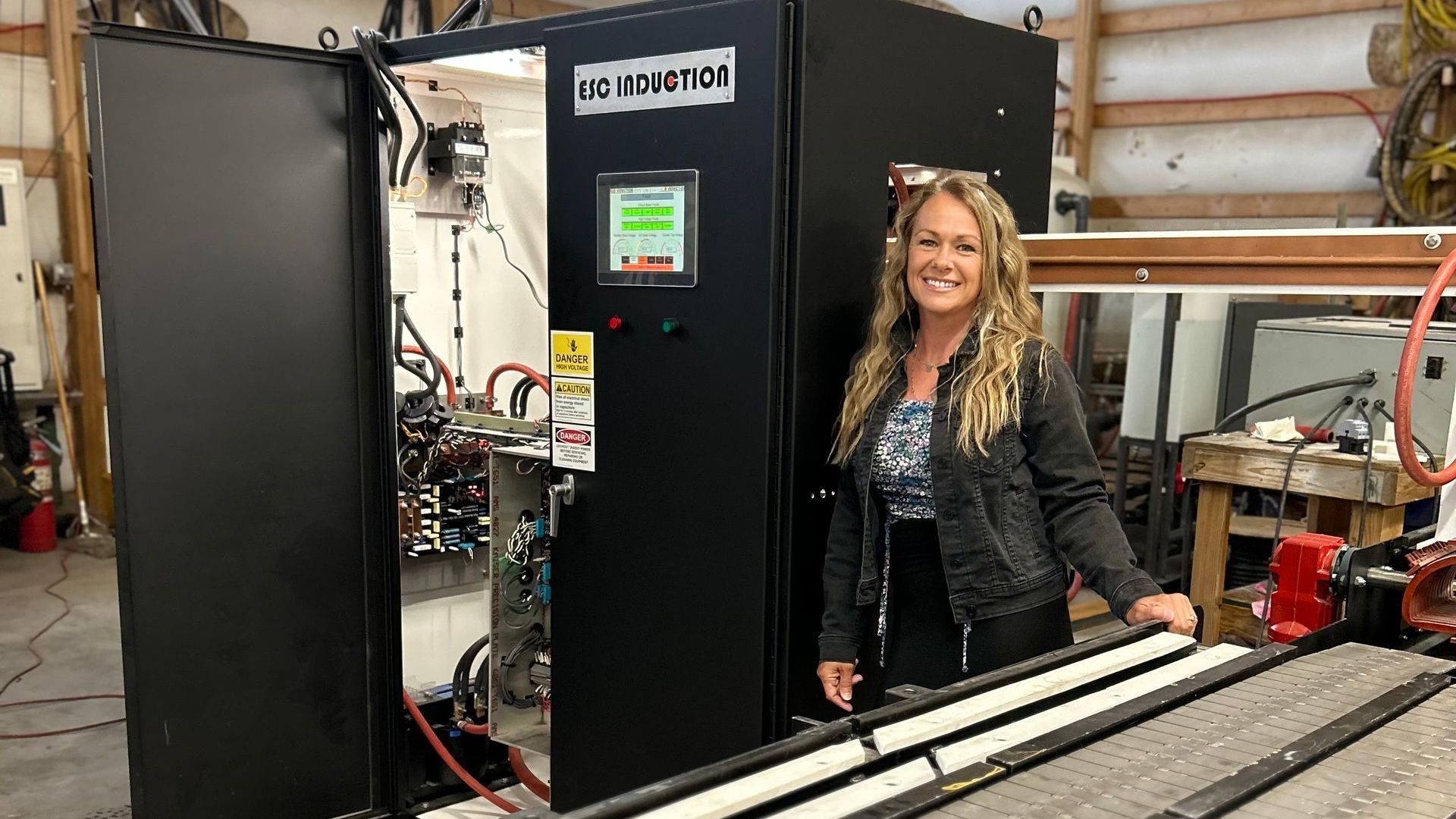
Touchscreen interfaces can also give operators access to production recipes, operating parameters, system status, diagnostics, and other information needed to manage the process efficiently.
Review Electrical and Cooling Requirements
Induction heating equipment requires appropriate electrical service and cooling capacity.
Before integration begins, engineers should evaluate the facility's electrical infrastructure and determine whether existing utilities can support the new system.
Cooling requirements must also be considered. Induction coils and power electronics depend on consistent cooling, making proper water flow, temperature, and water quality important parts of the installation.
Some applications may require a dedicated closed-loop cooling system designed around the induction equipment.
Available Floor Space Can Influence System Design
Manufacturing floor space is valuable, especially in facilities where production lines have evolved over many years.
A custom induction heating system can often be designed around the physical constraints of an existing facility. Engineers may adjust equipment layout, coil positioning, control cabinet placement, material handling, and service access to create a practical installation.
Maintenance access should be considered during this process as well. A system that fits into a tight space but cannot be serviced efficiently may create problems later.
Plan for Safety From the Beginning
Industrial equipment integration should always account for operator safety.
Machine guarding, emergency stops, interlocks, material handling, electrical safety, hot-part management, and operator access should be considered during system design rather than added after installation.
Automation can also help reduce direct interaction with hot components by moving parts between manufacturing stages automatically.
Testing Before Production Matters
One of the most important stages of a custom machinery project happens before the equipment reaches full production.
Testing allows engineers to verify heating performance, controls, material handling, safety systems, and equipment communication. It also provides an opportunity to identify adjustments before the system becomes responsible for meeting production schedules.
The objective is not simply to verify that the induction heater turns on. The objective is to confirm that the complete process works as intended.
Custom Engineering Makes Integration Easier
Existing production lines were not necessarily designed with future induction equipment in mind. That is why custom engineering is particularly valuable for retrofit and integration projects.
Instead of forcing the manufacturer to redesign an entire process around standard equipment, a custom induction heating system can be engineered around the facility, application, production goals, and existing machinery.
ESC Induction designs systems that may incorporate induction heating, PLC controls, custom coils, cooling systems, robotic material handling, conveyors, and other automation required by the application.
Improve the Process, Not Just the Heating Method
Integrating induction heating into an existing production line should accomplish more than replacing one source of heat with another.
It is an opportunity to examine how the entire operation works and identify ways to improve productivity, process control, reliability, and long-term manufacturing efficiency.
At ESC Induction, we begin with the manufacturing challenge and engineer the solution around the process.
If your facility is considering replacing an existing heating method or incorporating induction into an established production line, our engineering team can help evaluate the application and determine what successful integration will require.
Engineered Around Your Process. Industrial Heating Without Compromise.