Signs Your Manufacturing Process Is Ready for Automation
Manufacturing continues to evolve as companies look for ways to improve efficiency, maintain product quality, and remain competitive. While every operation is unique, many manufacturers eventually reach a point where manual processes begin limiting productivity.
Automation is often viewed as a major investment, but it should not be considered simply because it is a growing trend. The best automation projects begin by identifying specific production challenges and engineering solutions that improve the overall manufacturing process.
At ESC Induction, we believe automation should solve problems first. Whether integrating induction heating, robotic material handling, PLC controls, or custom machinery, every automation system should be engineered around your operation and your production goals.
If you've been wondering whether automation is the next step for your facility, here are several signs it may be time to evaluate your process.
1. Production Bottlenecks Are Slowing Growth
One of the clearest indicators that automation may provide value is the presence of production bottlenecks.
Perhaps one workstation consistently struggles to keep pace with upstream operations. Maybe operators spend valuable time manually transferring parts between processes, causing delays throughout the production line.
When one area limits the performance of the entire operation, improving that process can have a significant impact on overall throughput.
Automation can streamline material handling, coordinate equipment, and reduce unnecessary delays, allowing production to flow more efficiently from start to finish.
2. Quality Varies Between Production Runs
Manufacturers work hard to deliver consistent quality, but manual processes naturally introduce variation.
Differences in heating time, positioning, handling, or operator technique can affect the finished product. While experienced employees develop excellent skills, even the best operators cannot eliminate every variable during repetitive production.
Automation helps improve consistency by following programmed sequences and maintaining repeatable process parameters. Combined with industrial induction heating, automated systems can deliver highly consistent heating cycles, helping manufacturers improve repeatability while reducing scrap and rework.
3. Labor Is Becoming More Difficult to Find
Many manufacturers continue to face workforce challenges.
Skilled labor remains one of the industry's most valuable resources, and filling open positions has become increasingly difficult in many regions.
Automation is not about replacing experienced employees. Instead, it allows manufacturers to better utilize their workforce by reducing repetitive tasks and enabling skilled team members to focus on work that requires problem solving, technical knowledge, and process improvement.
By automating repetitive operations, manufacturers can often improve productivity while supporting the employees who keep their facilities running.
4. Safety Is a Growing Priority
Many industrial manufacturing environments involve high temperatures, heavy materials, repetitive lifting, and continuous production schedules.
These conditions can create ergonomic challenges and increase the potential for workplace injuries.
Automation can reduce manual handling by incorporating conveyors, robotic material transfer, automated loading systems, and integrated controls that keep operators away from hazardous processes while maintaining efficient production.
Improving workplace safety not only benefits employees but also contributes to long-term operational reliability.
5. Equipment Downtime Creates Costly Delays
Unplanned downtime affects more than production schedules.
Every hour equipment sits idle can increase labor costs, delay customer orders, and disrupt the entire manufacturing operation.
Modern automation systems provide better monitoring, diagnostics, and process visibility, allowing operators to identify potential issues before they become larger problems. Combined with preventative maintenance and responsive service, automation can contribute to greater equipment reliability and improved uptime.
6. You Need Better Process Visibility
As production demands increase, understanding what is happening throughout your operation becomes even more important. Manufacturers need access to accurate data that helps them make informed decisions, identify inefficiencies, and continuously improve their processes.
Modern automation systems can provide real-time insights into production performance, cycle times, equipment status, and system diagnostics. Instead of relying on manual tracking or reacting after a problem occurs, manufacturers can monitor critical information as production is taking place.
This level of visibility helps teams identify trends, improve scheduling, reduce downtime, and make data-driven decisions that support long-term operational success.
7. Your Production Goals Continue to Grow
Many manufacturers reach a point where customer demand begins to exceed the capabilities of their current production process. Increasing production without sacrificing quality can be difficult when operations rely heavily on manual workflows.
Automation provides a scalable solution that allows manufacturers to increase throughput while maintaining consistent quality standards. Rather than simply adding labor or extending production hours, automation helps facilities maximize the efficiency of existing operations.
As production requirements evolve, automation systems can often be expanded or modified to support future growth, providing manufacturers with greater flexibility over the long term.
Automation and Induction Heating Work Together
Industrial induction heating and automation are a natural combination.
Because induction heating delivers fast, repeatable, and precisely controlled heat, it integrates seamlessly into automated manufacturing environments. Automated material handling, programmable logic controllers, robotics, and touchscreen interfaces work together to create consistent production cycles while minimizing unnecessary operator intervention.
This combination allows manufacturers to improve productivity while maintaining tight process control throughout every stage of production.
Applications commonly include:
- Heat treating
- Forging operations
- Epoxy curing
- Shrink fitting
- Brazing
- Automated assembly lines
- Custom manufacturing processes
By combining automation with industrial induction heating, manufacturers gain a solution designed to improve efficiency without compromising product quality.
Why Custom Automation Matters
No two manufacturing facilities operate exactly the same way.
Production volumes, facility layouts, product designs, material handling requirements, and quality standards vary from one manufacturer to another. Because of these differences, automation should never be treated as a one-size-fits-all solution.
At ESC Induction, every automation project begins with understanding the customer's process. Our engineering team evaluates production goals, identifies opportunities for improvement, and designs systems that fit seamlessly into existing operations or support entirely new production lines.
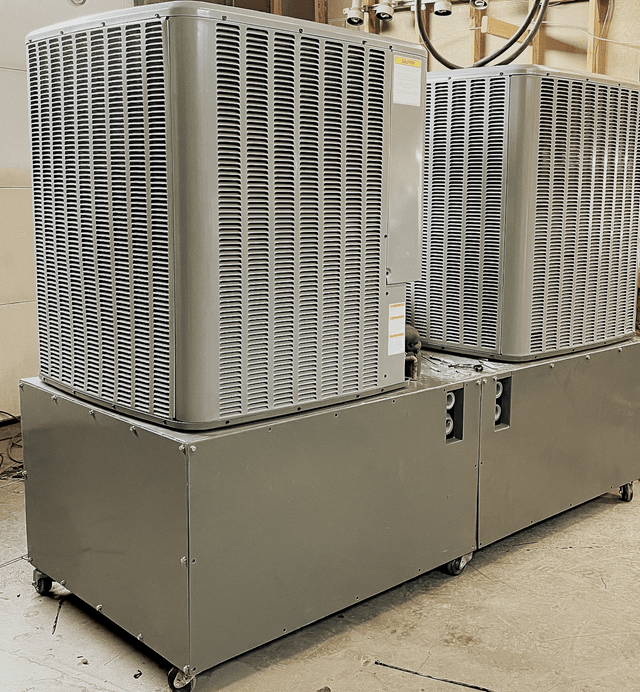
Whether integrating induction heating equipment, robotic material handling, custom machinery, PLC controls, or cooling systems, every solution is engineered around the application rather than forcing the application to fit the equipment.
Engineering Solutions That Support Long-Term Success
Automation is not simply about increasing production. It is about creating a manufacturing process that is more efficient, more consistent, and more reliable.
By reducing bottlenecks, improving process control, enhancing workplace safety, and supporting repeatable production, automation helps manufacturers build stronger operations that are prepared for future growth.
Just as importantly, successful automation projects are backed by ongoing service and support. From installation and commissioning to preventative maintenance and technical assistance, having an experienced engineering partner helps ensure equipment continues performing as intended for years to come.
Conclusion
If your operation is experiencing production bottlenecks, inconsistent quality, labor challenges, or increasing demand, it may be time to evaluate how automation could improve your manufacturing process.
The right automation solution should do more than reduce manual work. It should improve productivity, strengthen quality, support employee safety, and provide long-term operational value.
At ESC Induction, we engineer custom automation solutions around each customer's unique manufacturing process. By combining industrial induction heating, automation, custom machinery, and decades of engineering experience, we help manufacturers solve complex production challenges with practical, dependable solutions.
Ready to Explore Automation?
If you're considering automation for your facility, the team at ESC Induction is ready to help. Contact us to discuss your production goals and learn how a custom-engineered solution can improve efficiency, reliability, and long-term manufacturing performance.